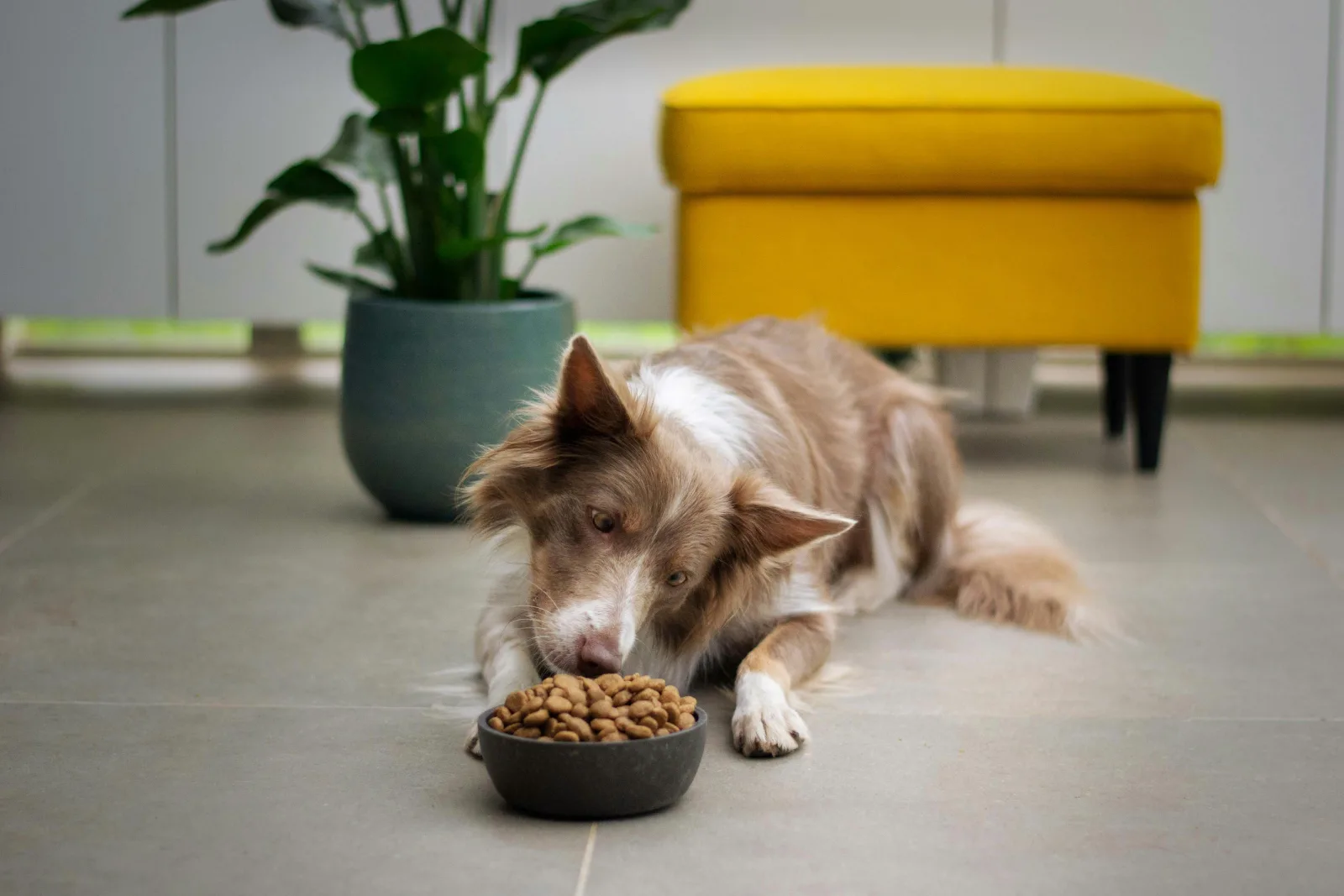
Short answer: puppies under about 3 months old usually need three to four measured meals a day. From about 3 to 6 months most do well on three meals, and between 6 and 12 months you can gradually move to two meals a day, which is what most adult dogs eat. Toy breeds often need more frequent meals early on, and large and giant breeds need a controlled amount of a food made for large-breed growth. Feed at the same times each day, and switch to adult food once your puppy reaches about 80 to 90% of their expected adult size.
Puppy feeding schedule by age
The table brings together guidance from veterinary sources (VCA Animal Hospitals, a veterinary nutritionist writing for PetMD, and the Purina Institute). Ranges overlap because puppies grow at different speeds, so use it as a guide and ask your vet if your puppy doesn’t fit neatly into a row.
| Puppy’s age | Meals per day | What to know |
|---|---|---|
| Up to about 8 weeks | Nursing, then small meals | Puppies are typically weaned from their mother’s milk at about 8 weeks, usually while still with the breeder or shelter. |
| 8–12 weeks | 3–4 | Small, frequent meals suit a small stomach and fast metabolism. Toy breeds may need 4 or more. |
| 3–6 months | 3 | If your puppy has been eating four times a day, this is a good time to drop to three. Large and giant breeds can stay on up to four meals until 6 months. |
| 6–12 months | 2–3 | Move to two meals a day as your puppy approaches adulthood. For large and giant breeds, two meals a day is usually enough from about 6 months. |
| Adult (timing depends on size) | 2 | Most adult dogs do well on two meals a day. Switch from puppy to adult food by size (see below). |
The number of meals changes as your puppy grows; the total daily amount is set separately, by your puppy’s weight, growth and body condition. When you drop a meal, split the same daily amount across fewer meals rather than cutting food.
How many times a day should a puppy eat?
Three to four times a day until about 3 months, three times a day from about 3 to 6 months, and two to three times a day from 6 to 12 months, ending on two meals a day as an adult.
Example puppy feeding times
Regular mealtimes make it easier to predict when your puppy needs to go outside, because eating usually triggers the urge to pee and poop soon afterwards. A three-meal day can be as simple as the example in PetMD’s veterinarian-written guide:
- About 6:30 am – breakfast, then straight outside for a potty break
- About 12:30 pm – lunch, potty break and a short walk or play
- About 6:30 pm – dinner, potty break and a walk
- About 9:30 pm – last potty trip before bed (no meal)
For a young puppy on four meals, add a mid-afternoon meal and space the others a little closer together, for example around 7 am, 11 am, 3 pm and 7 pm. The exact clock times matter less than keeping them the same every day and leaving a gap between the last meal and bedtime. Our puppy potty schedule by age shows how meals and potty breaks fit together, and how often a dog should poop explains what’s normal for puppies.
How much should you feed a puppy?
There’s no single amount that suits every puppy, because calorie needs depend on age, current weight, expected adult size and activity. PetMD’s veterinary nutritionist notes that individual needs can vary by up to 50% in either direction from the average, and that the feeding chart on the bag often isn’t the most accurate guide. As rough examples from that guide, a puppy under 4 months with an ideal weight of 5 lb needs about 392 calories a day, and a puppy over 4 months with an ideal weight of 20 lb needs about 734.
- Start with the label, then adjust. Use the food’s feeding guide as a starting point and change the amount based on how your puppy is growing. Your vet can work out a calorie target.
- Weigh regularly and check body condition. VCA recommends regular weigh-ins and growth charts (such as the Waltham puppy growth charts) to check that your puppy is growing steadily, and your vet can score their body condition at each visit. If your puppy is getting heavy, reduce the amount but keep the same meal schedule.
- Keep treats small. Treats and snacks should make up no more than 10% of daily calories, and training treats count.
- Use a growth food. Check the label’s AAFCO nutritional adequacy statement, which tells you whether the food is formulated for growth.
- Skip supplements unless your vet recommends them. A complete and balanced puppy food already contains the vitamins and minerals your puppy needs, and extra minerals can do harm (see the large-breed section below).
Fresh water should always be available. For how much puppies and adult dogs drink, see how much water a dog should drink a day.
Measured meals vs free feeding
Free feeding means leaving food out all day for your puppy to graze. Veterinary sources favor measured meals instead: PetMD calls portion-controlled meals the most effective way to feed growing puppies, and VCA warns that free-choice feeding can increase body fat and may contribute to skeletal problems in large-breed puppies. Set meals also show you straight away if your puppy’s appetite changes, and they stop one pet eating another’s food in a multi-pet home.
Large and giant breed puppies
Large and giant breed puppies (for example Labradors, Golden Retrievers, German Shepherds and Great Danes) grow for longer and are more sensitive to how they’re fed. The aim is slow, steady growth rather than the fastest possible growth:
- Choose a large-breed puppy food. The label should say it is formulated for growth including large dogs, meaning those expected to weigh 70 lb or more as adults.
- Don’t overfeed. Growing too quickly can stress developing bones and joints and lead to skeletal malformations. As the Purina Institute puts it, “Plump, heavy puppies are not healthy puppies.”
- Never add calcium. Too much calcium can cause skeletal problems in growing puppies, so don’t supplement a complete puppy food.
- Meals: up to four portion-controlled meals a day until 6 months, then two meals a day.
- Keep feeding a growth food until they mature. Large breeds can keep growing until up to 24 months, and adult maintenance foods aren’t recommended for growing puppies.
Breed pages such as Labrador age in human years cover how fast these breeds mature.
Toy and small breed puppies
Toy-breed puppies, such as Chihuahuas and Yorkshire Terriers, have tiny stomachs and burn through energy quickly. The American Kennel Club suggests 4 to 6 small meals a day for toy breeds in their first three months, and notes that toy-breed puppies are particularly prone to low blood sugar (hypoglycemia). Don’t let a very small puppy go long stretches without food, ask your vet how often to feed them, and contact your vet promptly if a toy puppy seems weak, unusually sleepy or won’t eat.
When to switch from puppy food to adult food
Switch when your puppy reaches about 80 to 90% of their expected adult size. That happens at very different ages depending on size, and sources differ a little, so the table shows both VCA’s and PetMD’s ranges.
| Adult size | VCA | PetMD |
|---|---|---|
| Small (under about 25 lb) | About 6–8 months | About 10–12 months |
| Medium (about 25–50 lb) | About 9–12 months | About 12–15 months |
| Large (50 lb and up) | About 12–18 months | About 15–24 months |
| Giant | Up to about 24 months | Included in large |
Your vet can estimate your puppy’s adult size and tell you when to switch. PetMD notes that staying on puppy food a little longer is fine as long as calories are adjusted.
Change foods gradually. VCA recommends switching over 7 to 14 days, starting with about 90% puppy food and 10% adult food and increasing the adult share a little each day. If your puppy gets loose stools, vomits or eats less, slow the change down. The same gradual approach works when you change brands at any age.
Size also changes how fast a dog ages. In our dog age in human years chart, a dog’s first year counts as roughly 10 to 15 human years, and Pet Age Pro shows your puppy’s human-age equivalent and life stage by breed.
Coming soon: Pet Planner
Pet Planner is the pet care log we’re building at AppSphere Solutions. Log meals, treats, water, walks and potty breaks for each pet with one tap, see the day’s totals on the Home screen, track weight trends in Insights, and set one-time or repeating reminders for feeding times. It isn’t released yet, but you can join the waitlist to hear when it’s ready for iPhone and Android.
No launch date yet. See what Pet Planner does
When to call your vet
- Digestive upset that doesn’t settle. Loose stools, vomiting or a reduced appetite after a food change should improve once you slow the transition. VCA advises calling your vet if they don’t settle within 24 hours.
- A toy puppy that is weak, very sleepy or won’t eat. Very small puppies are prone to low blood sugar, so call your vet promptly.
- Growth that looks too fast or too slow. If your puppy is getting plump, or isn’t gaining weight as expected, ask your vet to check body condition and work out how much to feed.
- Questions about supplements or homemade diets. Check with your vet before adding vitamins, minerals or other foods to a complete puppy diet.
Your puppy’s early vet visits are a good time to ask about feeding; our puppy vaccination schedule shows when those visits usually happen. This guide is general information and isn’t a substitute for advice from a veterinarian who knows your puppy.
FAQ
How many times a day should an 8-week-old puppy eat?
Usually three to four small, measured meals a day, spread evenly through the day. Toy-breed puppies may need four or more.
When can a puppy go to two meals a day?
Most puppies can move from three meals to two somewhere between 6 and 12 months. Large and giant breed puppies usually do well on two meals a day from about 6 months.
Should I leave food out for my puppy all day?
Veterinary sources generally advise against it. Measured meals at set times make it easier to control growth and weight, and free feeding can increase body fat and may contribute to skeletal problems in large-breed puppies.
When should I switch my puppy to adult food?
When they reach about 80 to 90% of their expected adult size: roughly 6 to 12 months for small breeds, 9 to 15 months for medium breeds, and 12 to 24 months for large and giant breeds. Change foods gradually over 7 to 14 days.
Sources
- VCA Animal Hospitals. Feeding growing puppies (weaning, meals per day, free feeding, treats, growth charts, supplements).
- VCA Animal Hospitals (Canadian Academy of Veterinary Nutrition; Caitlin Grant, DVM, DVSc, Dip ECVCN; Ryan Llera, DVM; Lynn Buzhardt, DVM). Nutritional requirements of large and giant breed puppies.
- VCA Animal Hospitals. When to switch your puppy to adult food (maturity by size, 7–14 day transition).
- PetMD (written by Amanda Ardente, DVM, PhD; reviewed by Tara Hansen, DVM). How much to feed a puppy (meals by age, example schedule, calorie needs, switching by size).
- Purina Institute. Feeding large and giant breed puppies.
- American Kennel Club. How often should dogs eat? (toy breed meals, hypoglycemia, free feeding).
Written by Jordan Ellis for AppSphere Solutions. Researched against the veterinary sources listed above. See how we research our guides, or browse more pet care guides.