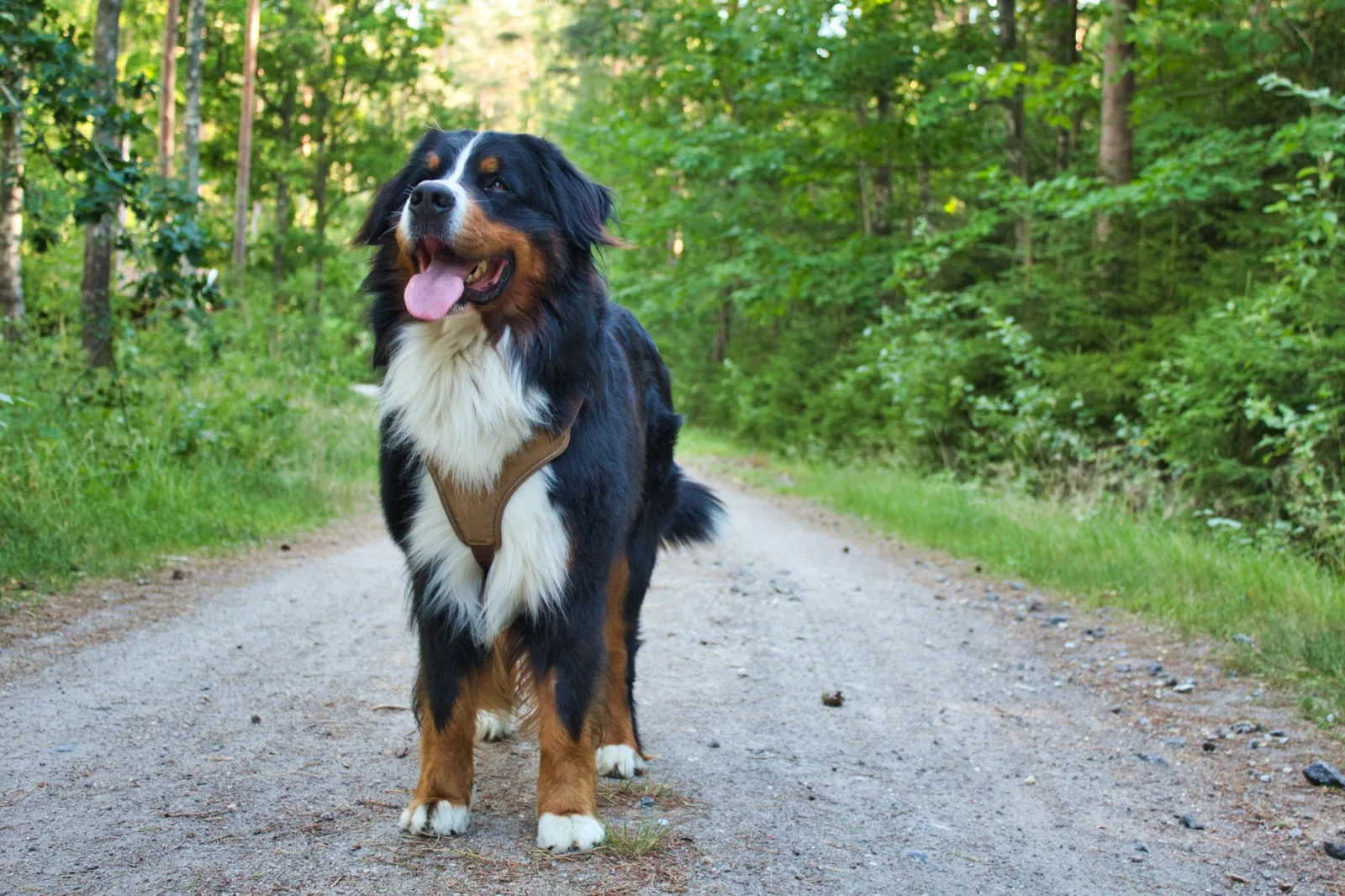
Short answer: most healthy adult dogs poop once or twice a day, and two or three times can still be normal, especially on a high-fiber diet or with more meals. Puppies go much more often, sometimes five times a day or more, while senior dogs often go about once a day or a little less. What matters most is your own dog’s usual pattern: a change that lasts more than about 24 hours, or no poop at all for 24 to 36 hours, is a reason to call your vet.
Below you’ll find a quick frequency guide by age, what changes how often a dog poops, when in the day to expect it, what healthy poop looks like (using the fecal scoring chart many vets use), and the signs of constipation, diarrhea or a blockage that mean your dog needs to be seen.
How often should a dog poop? Guide by age
How often should a dog poop: about 1 to 5 times a day, depending on age. Puppies go several times a day (5 or more can be normal), adult dogs usually 1–2 times (up to 3), and senior dogs about once a day or a little less.
There’s no single “correct” number, because frequency depends mostly on what and how often a dog eats. As Dr. Jerry Klein, the American Kennel Club’s Chief Veterinary Officer, puts it, normal defecation for an adult dog “depends on the type of food and frequency of feeding.” These ranges come from the AKC and PetMD’s veterinarian-written guidance:
| Life stage | Typical poops per day | Notes |
|---|---|---|
| Puppy | Several times a day; up to 5 or more | Puppies eat more meals (see our puppy feeding schedule by age) and digest food faster, and they often need to go shortly after eating. |
| Adult dog | 1–2 (up to 3 can be normal) | A higher-fiber diet or more meals can mean around three a day. |
| Senior dog | About 1, sometimes less | Going a little less often can be normal for an older dog, but a new change still deserves a vet check. |
These are typical ranges, not targets. A dog that has always gone twice a day and suddenly goes four times, or skips a day, is telling you more than a dog that has always gone three times.
Not sure which stage your dog is in? Our dog age calculator gives an estimate from their age and size, and our dog age in human years chart by size explains when dogs are usually considered adults and seniors, and our guide to when a dog is considered a senior breaks the senior age down by size and breed.
What affects how often a dog poops
PetMD lists several everyday factors that change how often a dog goes:
- Diet. The type of food matters. The AKC notes that dogs on a higher-fiber diet may poop around three times a day. A sudden switch in food can change both frequency and consistency.
- How often they eat. More meals usually means more poops. PetMD notes that a dog eating two meals a day will usually poop about twice a day.
- Extra snacks and scavenging. Treats, table scraps and raiding the trash all add to what goes through the gut. PetMD recommends keeping treats to no more than 10% of your dog’s daily diet.
- Exercise. Activity helps keep the bowels moving; low activity is one of the causes of constipation the AKC lists.
- Stress and routine. Travel, boarding, a new home or a changed household schedule can all shift a dog’s pattern for a while.
- Age. Puppies go more often than adults, and older dogs often go less.
- Medications and health. Some medicines, including opiates, diuretics, antihistamines, some antacids and cancer drugs, can cause constipation, according to the AKC. Illness can push frequency up or down.
When do dogs usually poop?
Most dogs have predictable times. According to PetMD, it takes a dog roughly 8 to 12 hours to digest a meal (faster in puppies and with smaller meals), and dogs often need to go about 30 minutes after eating or waking up. That’s why a walk about half an hour after each meal works well for many dogs, and why PetMD suggests walking your dog at least twice a day.
For puppies, the after-meal and after-nap trips are the most important ones for house training. Our puppy potty schedule by age lays out how often to take a puppy out, including the times right after eating, drinking, playing and sleeping.
What does normal dog poop look like?
Many veterinarians judge stool consistency with a 1-to-7 fecal scoring chart such as the one published by Purina and used in vet clinics. Consistency mostly reflects how much water is in the stool. In a healthy dog, the chart says, stools should be “firm but not hard, pliable and segmented, and easy to pick up” — a score of 2.
| Score | What it looks like | What it suggests |
|---|---|---|
| 1 | Very hard and dry, often separate pellets; takes a lot of effort to pass; leaves no residue | Too dry; can be a sign of constipation |
| 2 | Firm but not hard, pliable, segmented; little or no residue when picked up | Ideal |
| 3 | Log-shaped, little or no visible segmentation, moist surface; leaves residue but holds its form | Soft but still formed |
| 4 | Very moist and soggy but log-shaped; leaves residue and loses form when picked up | Soft stool |
| 5 | Very moist with a distinct shape, in piles rather than logs; loses form when picked up | Loose stool |
| 6 | Has texture but no defined shape; piles or spots | Diarrhea |
| 7 | Watery, no texture, flat puddles | Watery diarrhea |
Besides consistency, PetMD advises watching for changes in color and smell. A one-off soft stool after a new treat is common; a change in color, odor or consistency that lasts more than 24 hours should be checked by your vet, and any blood is a reason to call (see below).
Is your dog pooping too little? Signs of constipation
A dog that skips one poop but is otherwise eating, playing and not straining usually isn’t an emergency, according to PetMD. Constipation is more likely when a dog repeatedly strains with little or nothing coming out, or passes stools that are harder than usual (score 1 on the chart above). The AKC lists these signs:
- Straining or pain when trying to poop, sometimes producing nothing or only a small, sticky or bloody amount
- Hard, dry, pebble-like stools
- Eating less or refusing food
- Less energy than usual and, in severe cases, vomiting
- Belly discomfort: whining or reacting when the abdomen is touched
Common causes include dehydration, a change in diet, too little exercise, swallowed bones or garbage, some medications, orthopedic problems in older dogs, an enlarged prostate, hypothyroidism and nerve or spinal problems. The AKC notes that brachycephalic breeds such as Bulldogs, Pugs and Boston Terriers, toy breeds and Dachshunds are more prone to constipation.
How long is too long? The AKC’s chief veterinary officer says no bowel movement in over 24 to 36 hours is a cause for concern, and the AKC advises contacting your vet after 24 hours to be sure. A dog that is straining, vomiting or not eating should be seen sooner. Left untreated, constipation can progress to obstipation (stool so hard and compacted the dog can’t pass it).
Don’t give a human laxative, stool softener or enema without your vet’s advice; PetMD notes that even dog-safe laxatives can cause side effects such as diarrhea. For mild, recent constipation in an otherwise well dog, the AKC mentions extra water, a little canned dog food for moisture, a gentle walk and plain canned pumpkin (never pumpkin pie filling, which may contain xylitol). Check with your vet before trying any of these, especially if your dog has other health conditions. Making sure your dog drinks enough helps too; see how much water a dog should drink a day.
Is your dog pooping too much?
An occasional extra poop after a big meal, a long walk or a new treat is normal. What deserves attention is a change: PetMD notes that a dog who normally goes once a day and suddenly goes three or four times has a reason, which could be diet, exercise or a health problem. Urgency (rushing to go, accidents in the house) or a sudden increase in frequency can be a sign of a medical issue.
Loose stools (scores 5 to 7) along with more frequent poops usually mean diarrhea. Call your vet if a change lasts more than 24 hours, or sooner if your dog is lethargic, vomiting, not eating, or there is blood in the stool. Puppies, small dogs and seniors can be affected faster by fluid loss, so don’t wait to ask for advice with them.
Signs of a blockage: an emergency
Dogs that swallow bones, garbage or other objects can develop an intestinal blockage. The AKC describes this as a veterinary emergency that may need surgery. Signs include:
- Vomiting
- Weakness
- Loss of appetite
- Dehydration
- Bloating or abdominal pain
- Diarrhea, or being unable to poop
If you suspect a blockage, contact your vet or go straight to an emergency clinic.
Why it helps to track your dog’s poops
Because “normal” is different for every dog, the most useful thing you can bring to a vet visit is your dog’s own baseline: how many times a day they usually go, what the stool usually looks like, and when things changed. PetMD suggests keeping notes or a diary. A simple log of each poop (time, and a consistency score from the chart above) makes a change easy to spot and easy to describe, and it’s also handy during house training or after a food switch.
Coming soon: Pet Planner
Pet Planner is the pet care log we’re building at AppSphere Solutions. Log poops, pees, meals, drinks and walks for each pet with one tap, see today’s and this week’s totals on the Home screen, check past days on the calendar, and look at Insights charts by day, week, month or year, so it’s easier to notice when your dog’s routine changes. It isn’t released yet, but you can join the waitlist to hear when it’s ready for iPhone and Android.
No launch date yet. See what Pet Planner does
When to call your vet
- Call for advice if your dog’s usual pattern changes (more often, less often, or a different color, smell or consistency) for more than about 24 hours.
- Call promptly if your dog hasn’t pooped in 24 to 36 hours, or is straining repeatedly with little or nothing coming out.
- Call promptly if there is any blood in the stool or when your dog tries to poop, or if poop problems come with lethargy, vomiting or loss of appetite.
- Treat it as an emergency if you suspect your dog swallowed something it shouldn’t have, or you see repeated vomiting, a bloated or painful belly, weakness, or straining with obvious pain.
This guide is general information and isn’t a substitute for advice from a veterinarian who knows your dog.
FAQ
How many times a day should a dog poop?
Most healthy adult dogs poop once or twice a day, and up to three times can be normal, especially on a high-fiber diet or with more meals. Puppies can go five times a day or more, and senior dogs often go about once a day.
How long can a dog go without pooping?
Skipping a single poop isn’t usually a concern if your dog is otherwise well and not straining. But no bowel movement for 24 to 36 hours is a reason to call your vet, and sooner if your dog is straining, vomiting, not eating or seems in pain.
How soon after eating do dogs poop?
Many dogs need to go about 30 minutes after eating or waking up, according to PetMD, even though fully digesting a meal takes roughly 8 to 12 hours. Puppies often go very soon after a meal.
What should healthy dog poop look like?
On the 1-to-7 fecal scoring chart many vets use, the ideal is a 2: firm but not hard, pliable, segmented and easy to pick up. Very hard, dry pellets can point to constipation, and shapeless piles or puddles mean diarrhea.
Is it normal for a dog to poop five times a day?
For a puppy, yes, it can be. For an adult dog, it’s more than typical, so think about recent changes in food, treats or routine. If it’s a new pattern that lasts more than a day, or the stools are loose, check with your vet.
Sources
- PetMD (Sandra C. Mitchell, DVM, DABVP; reviewed by Barri J. Morrison, DVM). How often do dogs poop? (frequency by age, digestion time, timing after meals, factors, 24-hour rule, laxatives).
- American Kennel Club (quoting Jerry Klein, DVM, AKC Chief Veterinary Officer). How often should my dog be pooping? (1–2 times daily normal; 24–36 hours; intestinal blockage signs).
- American Kennel Club (quoting Veronica Villanueva, DVM). Dog constipation: home remedies and when to call the vet (signs, causes, prone breeds, when to call, home measures).
- Purina fecal scoring chart, hosted by The Ohio State University Veterinary Medical Center. Fecal scoring chart (PDF).
Written by Jordan Ellis for AppSphere Solutions. Researched against the veterinary sources listed above. See how we research our guides, or browse more pet care guides.