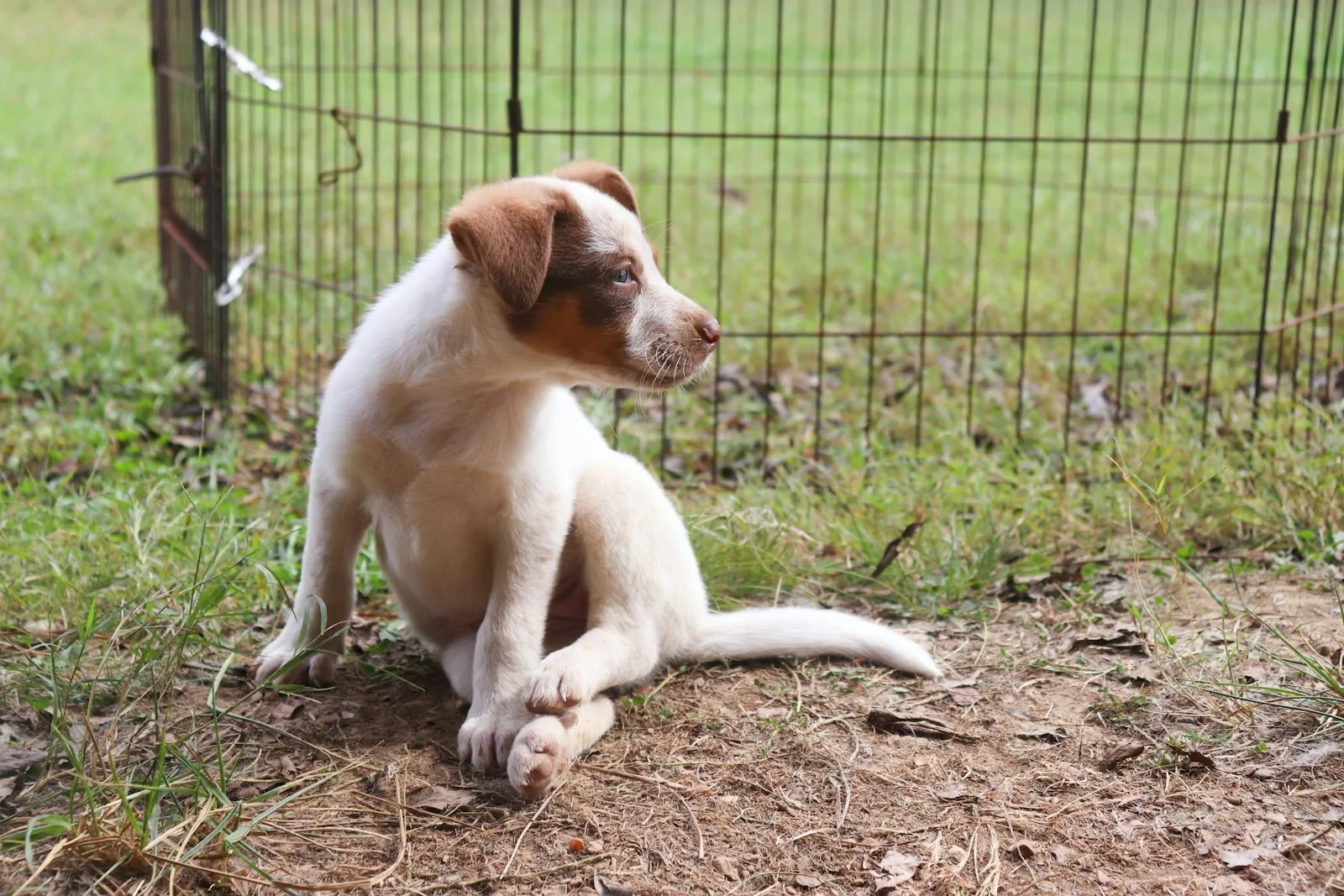
Short answer: a young puppy needs to pee far more often than an adult dog. In the first couple of weeks after you bring an 8-week-old puppy home, plan on a trip outside every 30 to 60 minutes while they’re awake, plus right after eating, drinking, napping and playing. A common rule of thumb is that a puppy can hold their bladder for about as many hours as their age in months, plus one: roughly 3 hours at 2 months and 5 hours at 4 months. Most puppies have good bladder control somewhere between 4 and 6 months.
Below is a potty schedule by age, the moments when puppies almost always need to go, an example day for a young puppy, what to do at night, and the signs that frequent peeing is a health problem rather than a training one.
Puppy potty schedule by age
The table combines two pieces of veterinary guidance: the “age in months plus one” rule for the longest a puppy can usually wait, and the number of potty breaks per day suggested in a house-training handout from UC Davis Veterinary Medicine’s Clinical Animal Behavior Service.
| Puppy’s age | Longest wait (rule of thumb) | Potty breaks per day | What it looks like in practice |
|---|---|---|---|
| 8–10 weeks | About 3 hours | 8–10 | Every 30–60 minutes while awake for the first two weeks home, then about every 2–3 hours, plus after meals, naps and play. |
| 3 months | About 4 hours | 8–10 | About every 3–4 hours during the day, plus after meals, naps and play. |
| 4 months | About 5 hours | 6–8 | About every 4–5 hours, plus after meals, naps and play. |
| 5 months | About 6 hours | 4–6 | Fewer, more predictable trips, still after waking, eating and play. |
| 6 months | About 7 hours | 4–6 | Out at least every 6 hours; many can sleep through the night without a break. |
| 7 months and older | Close to adult | 3–4 | Most adult dogs do well with about 3 to 5 outings a day. |
The “longest wait” column is a ceiling, not a target. It’s how long a puppy can usually manage when resting, not how long you should make them wait while they’re awake and active. Individual puppies vary, and toy breeds often need breaks more often.
The 2–3, 3–4 and 4–5 hour intervals for 2-, 3- and 4-month-olds follow the schedule in PetMD’s veterinarian-written guide. The breaks-per-day column is higher than those intervals alone would suggest because it includes the extra trips after meals, naps and play. VCA Animal Hospitals suggests that a 6-month-old should go out at least once every 6 hours, and more often is better.
The moments your puppy will almost always need to go
Clock-based schedules help, but puppies are just as predictable around certain events. Take your puppy out:
- Right after waking up, both first thing in the morning and after every nap.
- Shortly after eating or drinking. Eating and drinking naturally trigger the urge to go, so plan a trip outside soon after every meal. (For how much water puppies and adult dogs need, see how much water a dog should drink a day.)
- During and after play or exercise. An exciting play session is a classic time for an accident.
- Before you leave the house and as soon as you get home.
- Last thing before bed.
- Whenever you see the signs: sniffing the floor, circling, pacing, whining, waiting or scratching at the door, squatting, or suddenly wandering off from what they were doing.
Puppies grow up quickly. In our dog age in human years chart, the first year counts as roughly 10 to 15 human years, which is why the schedule changes so much from one month to the next.
An example day for a 10-week-old puppy
Every household is different, so treat this as an illustration of how the rules above fit together rather than a timetable to follow to the minute.
- 6:30 am – Wake up and go straight outside.
- 7:00 am – Breakfast, then outside again within a few minutes.
- 7:30–9:00 am – Play and training, with a trip out every 30–60 minutes and right after play.
- 9:00 am – Nap in a crate or puppy pen. Out again as soon as they wake.
- Midday – Lunch, potty break, short play, potty break, nap.
- Afternoon – The same pattern: awake time with frequent trips, then a nap.
- 5:30 pm – Dinner, then outside.
- Evening – Calm time and play, with trips out every 30–60 minutes. Watch closely: a sleepy puppy may wander off to find a quiet spot to go.
- 10:30 pm – Final potty break, then bed.
- Overnight – One or two quiet trips outside, depending on age (see below).
How often does a puppy need to pee at night?
The “months plus one” guideline applies at night too, so a 2-month-old will usually need at least one trip outside overnight, and you should expect some early-morning wake-ups for the first weeks. A few things make night breaks easier:
- Keep it boring. Go out on a leash, wait quietly, give calm praise when they go, and head straight back to bed. Energetic play can leave your puppy wide awake.
- Use a crate or small pen for sleeping. A small, comfortable space keeps your puppy safe and confined when you can’t supervise, with the bed, toys and water away from any potty area.
- Stretch the gap gradually. If your puppy is consistently dry when you wake them, you can push the alarm a little later every few nights.
By around 6 months, VCA notes that many puppies can make it through the night without a potty break.
Making the schedule work
- Use the same spot. Take your puppy to the same place each time and wait. Save play until after they’ve gone, so the trip stays about one thing. Until your puppy has finished their vaccines, a spot in your own yard is safer than places many unknown dogs use; our puppy vaccination schedule shows when each shot is due.
- Reward immediately. Praise and a small treat the moment they finish, outside, not when you’re back indoors.
- Supervise or confine. Keep your puppy in a room or two where you can see them. When you can’t watch, use a crate, puppy pen or small puppy-proofed room, and expand their space as they become reliable.
- Handle accidents calmly. If you catch your puppy in the act, interrupt with a clap or a cheerful noise and take them straight outside. Never punish after the fact or rub their nose in it; it doesn’t teach them anything and can make them afraid of you.
- Clean with an enzymatic cleaner. Leftover odor can draw a puppy back to the same spot.
According to the American Kennel Club, most puppies make big progress within a few weeks, but full house training often takes several months.
Keep a simple potty log
Writing down when your puppy eats, drinks, pees and poops for a few days usually reveals a pattern: how long after breakfast they need to go, how long they can last after a nap, and which times of day accidents happen. That makes it easier to get them outside a few minutes before they need it. A log is also useful information for your vet if something changes, such as peeing much more often than usual.
Coming soon: Pet Planner
Pet Planner is the pet care log we’re building at AppSphere Solutions. Log pee, poop, meals, water, walks, crate time and sleep for each pet with one tap, see the day’s totals on the Home screen, review entries on a calendar, and set one-time or repeating reminders. It isn’t released yet, but you can join the waitlist to hear when it’s ready for iPhone and Android.
No launch date yet. See what Pet Planner does
When frequent peeing isn’t normal: when to call your vet
A healthy puppy pees often because their bladder is small and their control is still developing. That’s different from a puppy who suddenly starts going more often than usual, or who seems uncomfortable. Urinary tract problems such as bladder inflammation or infection (cystitis) can cause:
- Peeing much more often than normal, often in small amounts
- Squatting and straining for a long time to pass only a little urine
- Dribbling small spots of urine in several places
- Blood in the urine, or urine that looks red or pink
- Crying or whimpering while peeing
- Accidents that keep happening even though you’ve been consistent with training
Call your veterinarian promptly if you notice any of these. Treat it as urgent if your puppy keeps trying to pee but little or nothing comes out: a blocked urethra can be life-threatening, so contact your vet or an emergency clinic right away.
This guide is general information and isn’t a substitute for advice from a veterinarian who knows your puppy.
FAQ
How long can an 8-week-old puppy hold their pee?
By the “age in months plus one” rule, about 3 hours at most, and usually only when resting or asleep. While they’re awake and active, plan on a trip outside every 30 to 60 minutes for the first couple of weeks.
How often should a 3-month-old puppy pee?
Typically every 3 to 4 hours during the day, plus right after eating, drinking, waking up and playing. Counting those extra trips, that usually adds up to around 8 to 10 potty breaks a day.
When can a puppy sleep through the night without peeing?
It varies, but many puppies can manage the whole night by around 6 months. Younger puppies usually need one or more quiet trips outside overnight.
At what age are puppies fully potty trained?
Most puppies have good bladder control by 4 to 6 months, and many make big progress within a few weeks of consistent training. Being fully reliable in the house often takes several months.
Why does my puppy pee so often?
Young puppies have small bladders and limited control, so frequent peeing is normal, especially after eating, drinking, napping and play. If your puppy suddenly starts going much more often, strains, passes only small amounts or has blood in the urine, see your vet to rule out a urinary problem.
Sources
- UC Davis Veterinary Medicine, Clinical Animal Behavior Service. Housetraining your puppy (handout; potty breaks per day by age, confinement, accidents).
- PetMD (written by Brittany Grenus, DVM; reviewed by Molly Price, DVM). How to stop a puppy from peeing in the house.
- American Kennel Club. Potty training puppy tips.
- VCA Animal Hospitals. How to help your puppy struggling with potty training.
- ASPCA. House training your dog or puppy.
- VCA Animal Hospitals (Weir M, Hunter T, Ward E, DVMs). Cystitis in dogs.
- VCA Animal Hospitals. Urinary issues: when to seek urgent care.
- Merck Veterinary Manual. Bacterial cystitis in small animals.
Written by Jordan Ellis for AppSphere Solutions. Researched against the veterinary sources listed above. See how we research our guides, or browse more pet care guides.